
Paracas, Ica, Peru: At my first glimpse of the Pacific I nearly cried: the mountains are beautiful and Lake Titicaca is stunning but it is still just a lake. It’s not quite the same. I have grown to love the mountains but I really missed the ocean over the last two months.
My first dip in the bay was heavenly. Because it’s a bit protected the water wasn’t that cold, just delightfully refreshing.
The main attraction in Paracas is Las Islas Ballestas that are affectionately known as “the poor man’s Galapagos”. It’s a short excursion that lasts 2 hours.
The first stop is along the coast in front of a giant candelabra whose origins are unknown. The lines are much deeper and wider than the Nazca lines. The guide provided several theories that made no sense after he told us it was carved 900 years ago. The candelabra is later than the Nazca lines but pre-free masons.
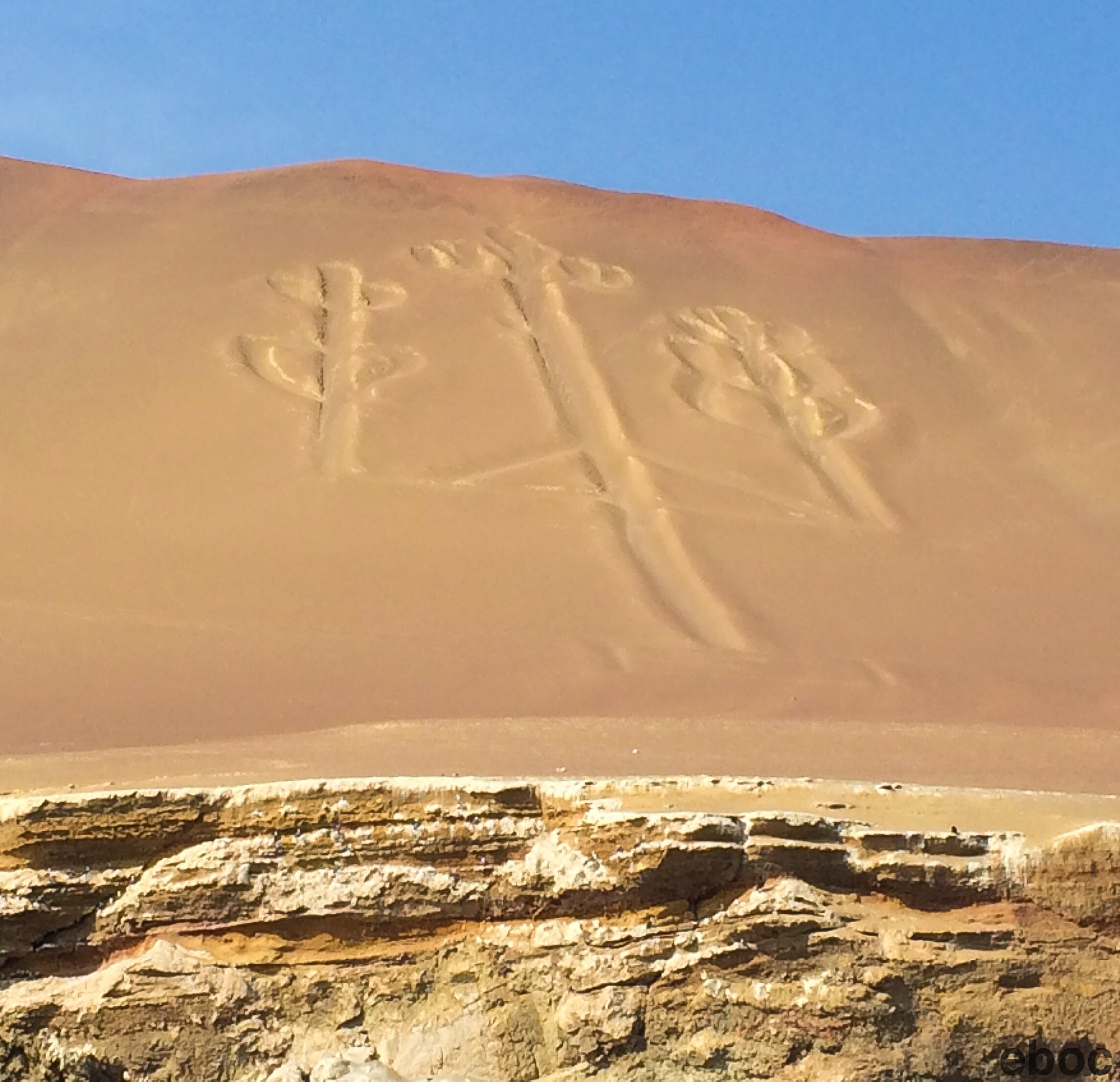
Obviously it was made by aliens!
The islands are full of cormorants, penguins and has a beach that is a breeding ground for sea lions.

Baby sea lions are adorable but make an ungodly racket.

The islands give off a pungent aroma: I mean it’s a really powerful smell. The government collects the birds’ guano and sells it. Most of it is used to make fertilizer in Peru but a fair amount is exported to Europe and Canada for the same purpose.

Government employees work in four-month shifts: they live on one of the smaller islands and collected the guano. They also insure that unauthorized boats don’t land to steal the guano or kill any of the animals. The workers are sent back to the mainland for a month to see their families and for medical exams to make sure inhaling bird droppings for 120 days hasn’t made them sick.

Big business in bird shit.

In the afternoon I went to the national park on the Paracas peninsula. It is the largest national park in Peru because it encompasses a large marine habitat; it is Peru’s only marine national park.
You maybe wondering why the Islas Ballestas are protected but are not included in the national park. One of my fellow tour participants hypothesized that since the islands are just outside the park’s perimeter, the government can use the islands for commercial purposes.
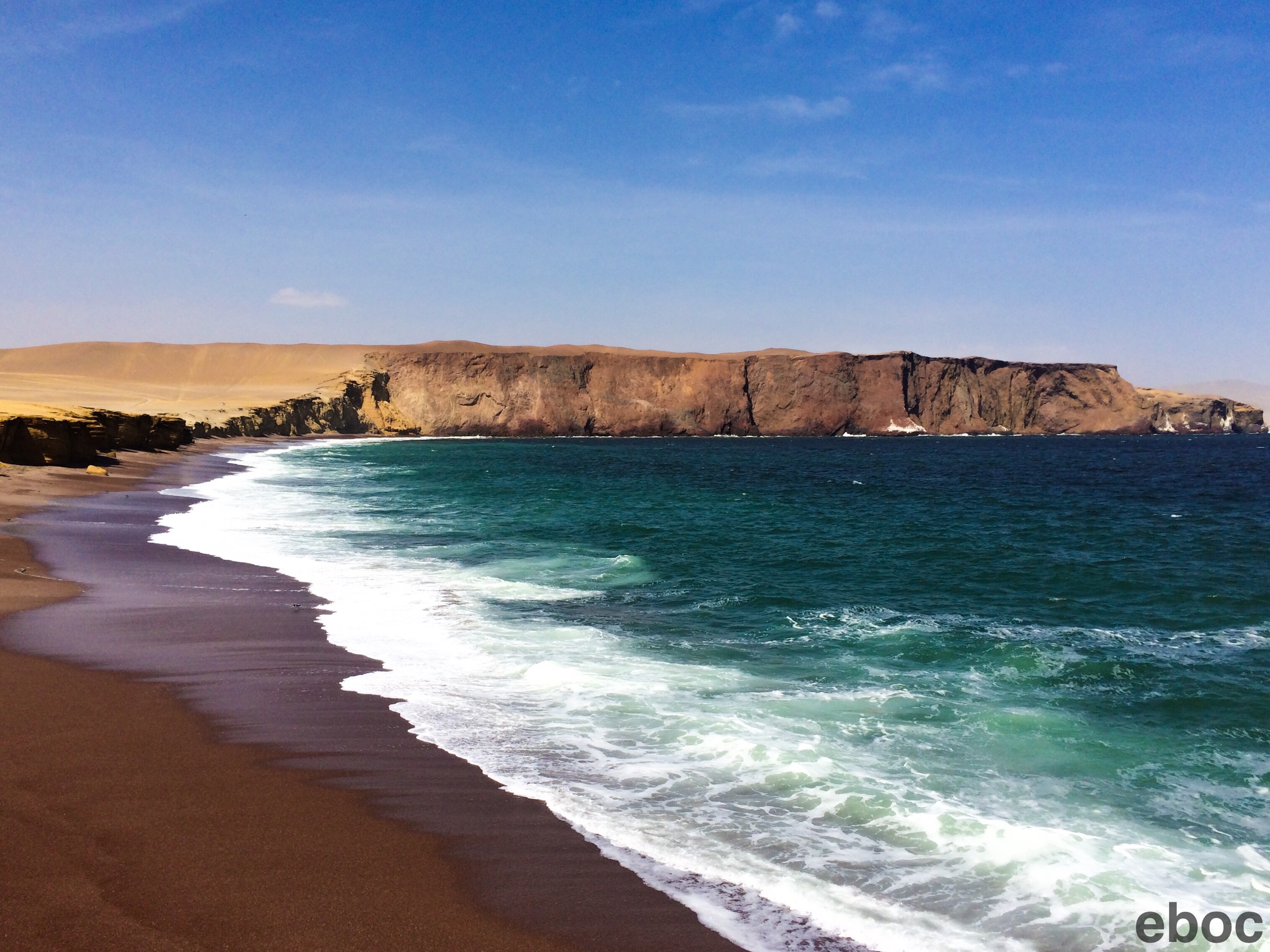
From the park we got spectacular views of the ocean, beautiful rock formations, and beaches. The name, Paracas means place of sandstorms. “Para” means rain and “acas” means sand in Quechua. It comes from the language the the pre-Incan people spoke on the peninsula.

So while the views are spectacular you get a face full of sand as you try to take pictures.
At the end of the tour, we stopped in a fishing village for the freshest ceviche I’ve ever had.
 elizabethboconnell