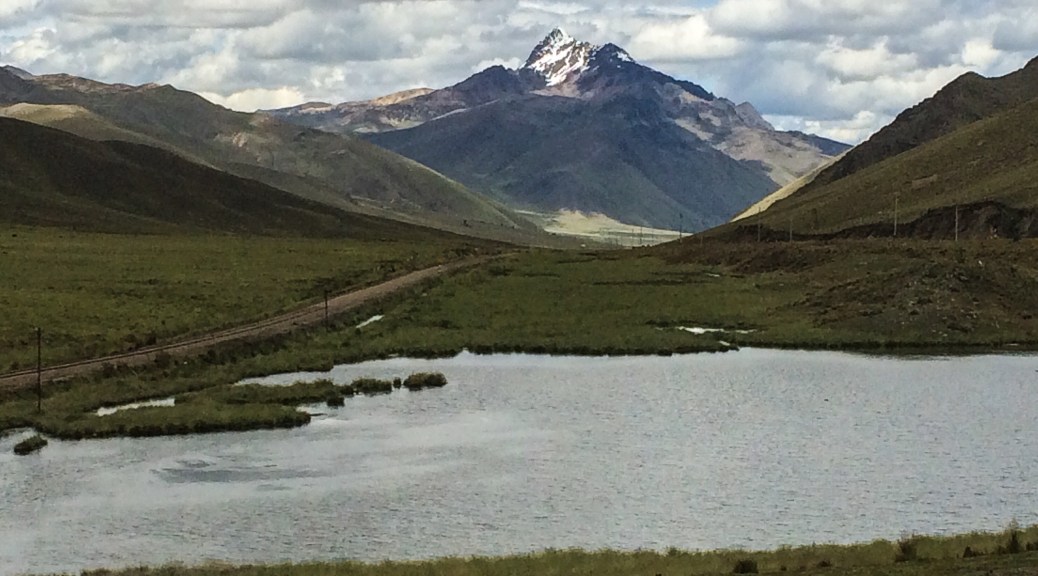
Puno, Puno Province, Peru: I decided to take one of the tourist buses from Cusco to Puno to see more of the country side and local culture.
The first stop was a Jesuit Church in Andahuaylillas. The church was built in the 17th century and taken over by the Dominicans when the Jesuits were expelled from Peru in the 18th century by the Spaniards.

After Peruvian independence from Spain the Jesuits returned to Peru and the church became Jesuit again.
The second stop was another Jesuit Church in Huaro. Also built in 17th century it was abandoned in the 18th century.

Because the Domicans did not use the church over the years it fell into disrepair. When it was first built it was covered in mural paintings. The locals refer to it as the Sistine Chapel of the Americas.

It is odd that there are such opulent churches in remote mountain towns. The Viceroy of Toledo constructed the towns and built the churches as the Spanish came through.
The conquistadors kicked the Incas out of Cusco and placed the elite Incan families in the surrounding towns.
The third stop was in Raqchi, which is known for the temple of Wiraqocha. On the border between Quechua and Aymara territories, Raqchi was an important check point and had many silos to store grain collected in taxes.
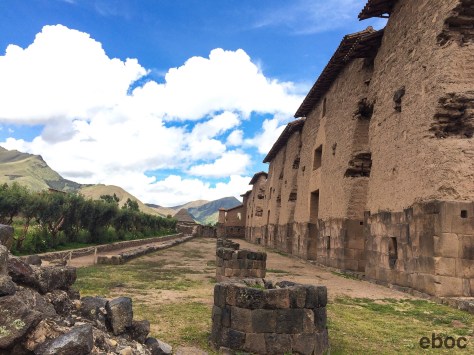
There was push back from some of the pre-Incan people who resisted Incan rule and the Incan gods. The town was surrounded by a wall that was 2 meters wide, 3 meters high, and 5 kilometers around.
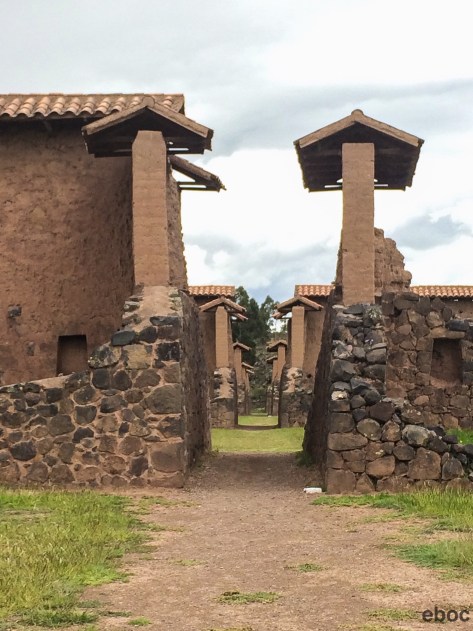
The ninth Incan leader, Pachacuti, built the temple to Wiraqocha, which was 92 meters long and 22 meters high. He erected a statute of Wiraqocha that the Spaniards destroyed: the body is in Cusco and the head is in Madrid. Pachacuti also built Machu Picchu.

He incorporated pre-Incan gods into the Incan pantheon. Wiraqocha was the creator and could not be seen, as opposed to the sun that was the principal god for most pre-Incan religions. By giving the conquered people a visual it helped them adopt Wiraqocha as the principal god.
The fourth stop was at La Raya Pass. At 4335m it is the border between the Province of Cusco and the Province of Puno.

The fifth stop was in Pukara. Pukara was a town constructed by pre-Incan and pre-Christian altiplano people. They abandoned the city over 2000 years ago because of a long drought and fled to Lake Titicaca. The people who migrated joined the fledgling Tiwanaku culture, which spread as far south as the Atacama desert.

The cathedral was constructed from the ancient Pukaran mammoth administration building. The cathedral is large but it didn’t use up all of the stones form the ruin.
Today Pukara is known for making ceramic bulls that people put on the roofs of their houses for protection.
We spent the next two hours driving through the altiplano, through little villages and past women herding cows, sheep, and llamas. The mountains were beautiful and the landscape stark. I was reminded of a quote from The Quiet American by Graham Greene:
If I believed in your God and another life, I’d bet my future harp against your golden crown that in five hundred years there may be no New York or London, but they’ll be growing paddy in these fields, they’ll be carrying their produce to market on long poles, wearing their pointed hats. The small boys will be sitting on the buffaloes.
About an hour outside of Puno is the city of Juliaca. My tour guide informed us that it has two claims to fame:
- It is the largest city in Puno Province;
- It is best known for having a large black market devoted to electronics and other items smuggled in from Bolivia.
My personal observation: it has all of the charm of Irbid, Jordan down to the cinder block houses and dirty streets.
 elizabethboconnell