
I did not have a religious experience on the Incan Trail. But as I hiked down from the sun gate, the mist lifted and I caught my first glimpse of Machu Picchu below, I fully understood why someone might.
Setting off for the trip from Cuzco my tour group drove through the Sacred Valley. We went to an Incan site that overlooks Cuzco, Saksaywaman;

– an animal preserve;

– Pisac and ended in Ollantaytambo.

The ruins in Ollantaytambo, both Incan and pre-Incan, are wonderful. From the Sun Temple we watched the sunset over the valley. The steps up to the temple were also a good warm up for what was to come.
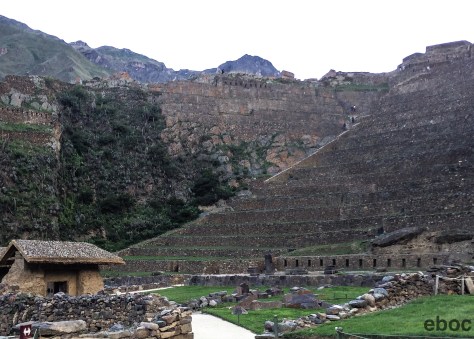
The night before we were set to leave for Kilometer 82 (the modern-day start of the trail) our guide, Roger, told us the President of Peru was coming to Cusco and there were going to be protests throughout the province.
As a result, G Adventures, through which I had booked the trek, was bringing the porters in from their villages to make sure we could set off on time. We had to leave by 5 am before the roads were shut down.
What Roger did not tell us was that the buses we were supposed to take to km 82 were still in Cuzco with our tents, sleeping bags, and — most importantly — our tickets to get onto the trail and into Machu Picchu.
The buses left Cuzco at 2 AM but still ran into trouble. According to the assistant guide, Javier who came out on one of the buses, they saw fires along the way and road blockades. They ended up coming by back roads.
After we were loaded up, the local inhabitants wouldn’t allow us out of Ollantaytambo on the tourist buses. We had to use local minibuses (pay the toll man sort of thing) which are made for shorter Peruvians, not long legged Americans or Australians. We moved over to the vans and set off on a back road.
I’m using “road” loosely here; I think it was more of a cattle path. We crossed over the river at one point, which was running high because of the rainy season, and Javier told us that it was a new bridge because the old bridge had washed away last year. I felt that was unnecessary information and was glad that I heard it after we had used the bridge.

We stopped to wait for some bucking bulls to get out of the middle of the road, but otherwise the trip was uneventful and protest-free, albeit a little cramped.
At Kilometer 82 we went through the check point and by 7:45 we were off and running: or rather sauntering. The first day was comparatively light and we were at our campsite by midday.

The tents had been set up, but we arrived more quickly than expected, so lunch wasn’t ready for us. For the Incan Trail in March it was bloody hot. That and the altitude made the hiking slightly challenging.
Coming off of Torres del Paine, which was basically at sea level, I felt as though I was in pretty good shape. And for the entire three and a half days neither my feet nor my legs hurt. However, my lungs were on fire.
In fact, if I had a different set of lungs the whole thing would have been a much more enjoyable experience.
Day in and day out the men all shot up ahead, closely followed by the runners. And the rest of us who had grown up at sea level straggled into the break points or camp at different rates.
Even more frustrating, or impressive, are the porters who trot along with 50kg on their backs in sandals or cloth shoes. Many of them are not young.

Along the trail we passed other ruins, refugios and relay stations that the Incas used on their way to Machu Picchu.

On the way up some of the steeper inclines I thought several times that the Incas were completely crazy to choose Machu Picchu as the location for their sacred city and to build this particularly difficult trail to reach it.
But then I would go around a corner and have a breathtaking view of the mountains and the river, and it would make sense again.
The second day was hard. Our campsite the first night was at 3600 meters. We climbed to over 4000 meters by noon and then dropped down to 3800 meters where the second campsite was.
The pass between two mountains is called dead woman’s pass because from below it looks like a woman in repose. I think there’s a nice double entendre there too.
Regrettably, it rained on the second day, so when we got to the pass at 4200m we couldn’t see anything. The Trail is closed during February, the height of the rainy season, for maintenance and is cleaned and fixed for the coming year.

I’m glad I was there at the beginning of the season because the steps on the way down from the pass were already covered in moss. And it was raining so hard the water cascaded down the rocks like a river.
I kept up a steady mantra of “you will not fall” in my head and made it down unscathed. I got about halfway down when Javier decided I was going too slowly and grabbed my elbow to help me along claiming that he was better than a hiking pole. Two steps in he immediately slipped, inspiring real confidence.
As soon as I got to camp it stopped raining, and we had a beautiful view of the valley.

The third day was a little bit shorter. Machu Picchu is only at 2800m, so we had to go down 3000 steps. The porters run down the steps, which has to be great for their knees.

It was only drizzling, which made it misty and added to the mysticism of the place.

Right above the campsite are the Intipata and Wiñawayna ruins. They get short-changed by their proximity to Machu Picchu.
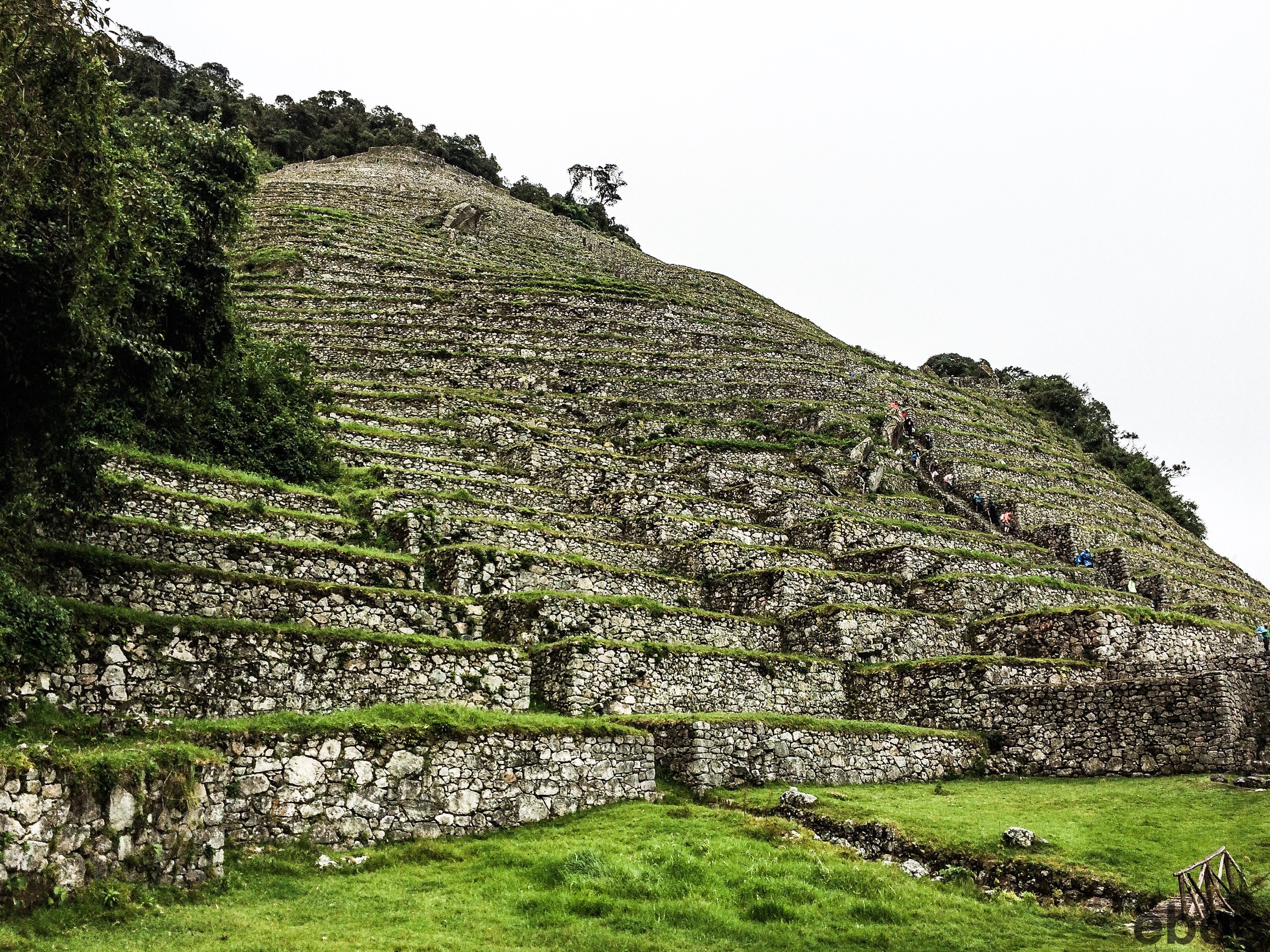
We arrived on the fourth day. Everyday was an early start, but the 3:30 wake up call didn’t seem so bad because I was jazzed about finally arriving in Machu Picchu!

We practically sprinted to the Sun Gate. Our guides had said that the Sun Gate can sometimes be a disappointment because it is often cloudy in the early morning and the view isn’t spectacular.

About 100m beyond the Sun Gate we got our first glimpse of Machu Picchu, and it was staggering.
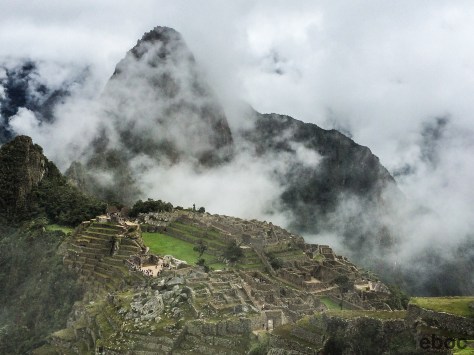
It is everything I dreamed it would be and more. The steep terraces are bisected by even steeper stairwells.
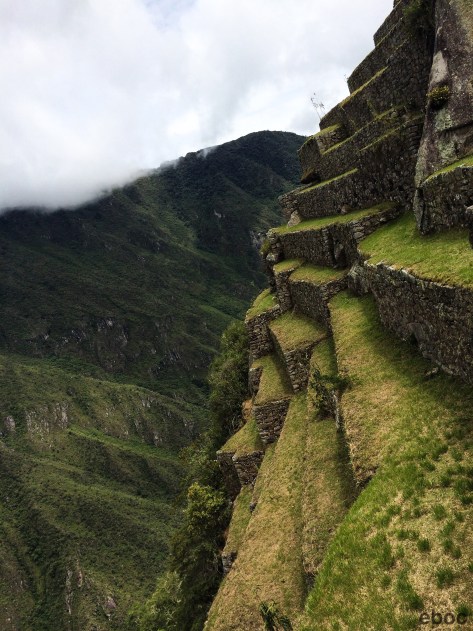
It’s full of inventive temples and elegant houses for the nobles who came to Machu Picchu in its heyday.
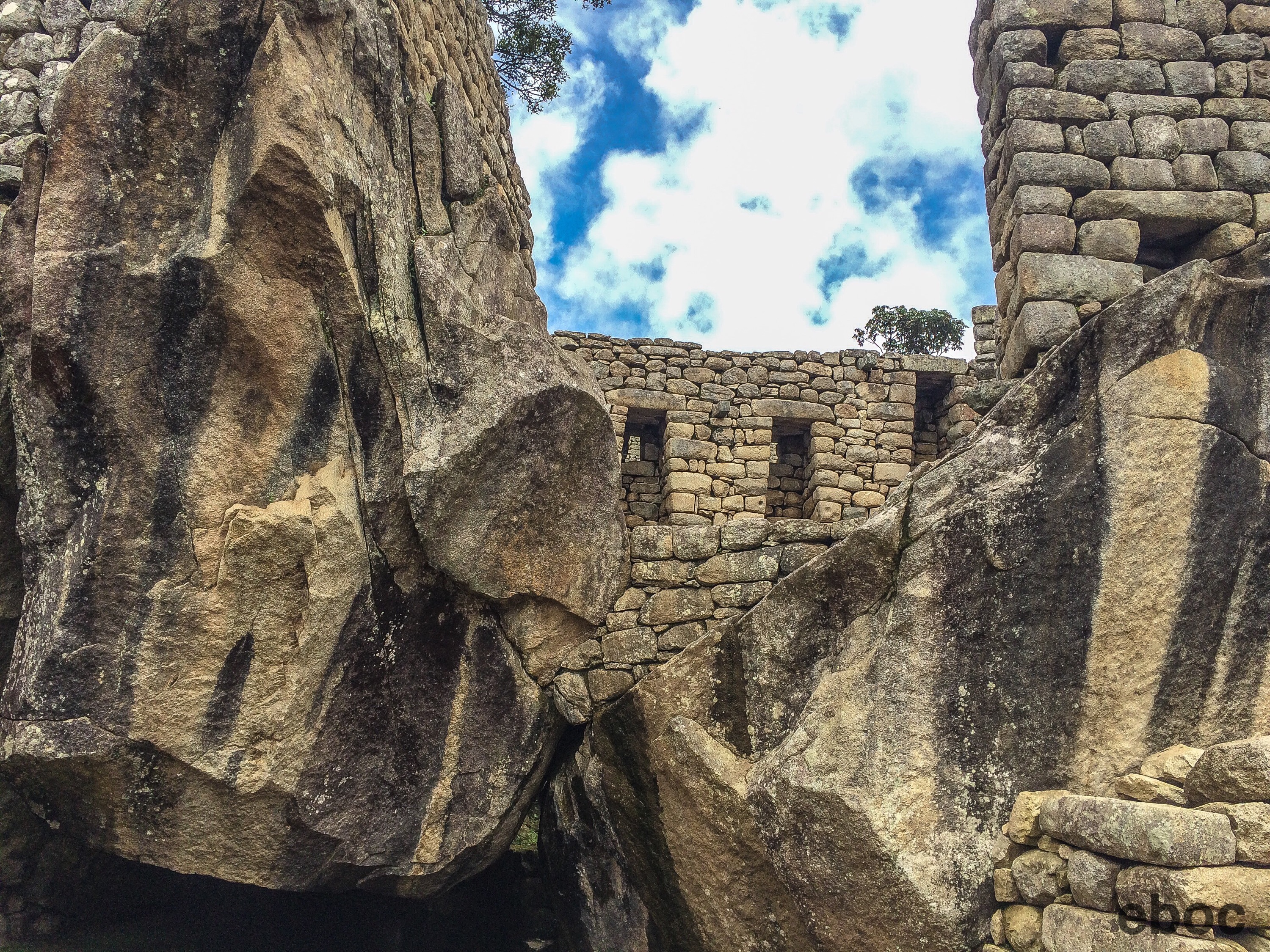
Machu Picchu means old mountain. Next to it is the smaller Waynu Picchu, which means new mountain.

On the trail I was surrounded by my 15 fellow hikers, 22 porters, 2 guides, and another 20 people I saw along the way. When we arrived at Machu Picchu, there were hundreds of other tourists walking around. It was a shock to be back in the world with so many people.
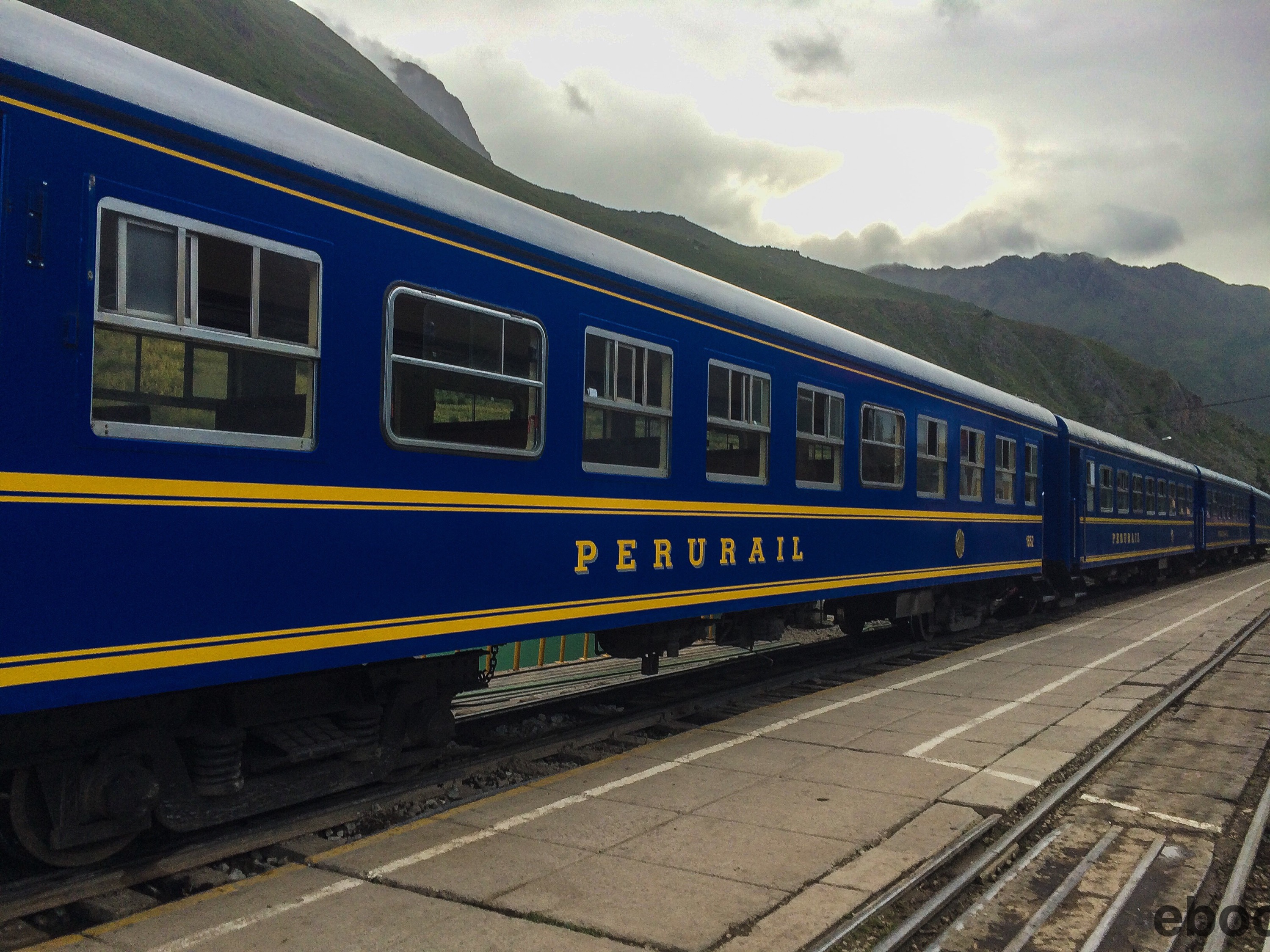
After a few hours in Machu Picchu, we took the buses down to Aguas Calientes, the way most tourists arrive. After a celebratory lunch we had a rather raucous train ride back to Ollantaytambo followed by a more subdued bus ride to Cuzco.
Hiking the Incan Trail was a fantastic experience. No matter how arduous it seemed at the time, coming down the mountain towards Machu Picchu after three days in the woods was an indescribable feeling and provoked a sense of euphoria I hope to have again.
 elizabethboconnell
This is fabulous!
Love, Mom
Janet
H: 914-834-1636 C: 914-275-3202
LikeLike