
Mendoza, Argentina: I love Mendoza. It’s got a great climate and lovely tree lined streets. The central plaza, Plaza Independencia, is surrounded by four satellite plazas that orbit it diagonally.

Plaza España, a few blocks away to the south east, has marvelous tiling on its fountain and benches. It’s a beautiful place to walk around.

I have also eaten my way through the city with a varied menu of hamburgers, bife de chorizo, jamón y queso, more beef, and then chivito (kid goat) that is typical to Mendoza. The Argentines really do amazing things with meat.
Before leaving New York for Buenos Aires I talked to a girl who had studied abroad in Argentina, and about half way through our conversation she announced she was a vegetarian. I have no idea what she ordered in restaurants: it’s not a big salad place.
As many people had recommended it I went white water rafting in the Mendoza River. Another first for me, I went with a group up to Potrerillos, which is 70 km to the west of the city in the foothills of the mountains.

The trip through the rapids was about 12 km long and they were classified as level 3. Since the river comes down from the Andes the water is best described as brisk and refreshing. The rapids were exhilarating. One boat did hit a rock and whiped out. My boat made it through unscathed, it just had seven very wet people whose smiling faces were covered in muddy water.
Although the typical tour of Mendoza includes wine tasting bike tours in Maipu and Lujan de Cuyo I opted out for a variety of reasons.
First off, I’ve had nothing but bad “table wine” Malbec all my life. Table wine, as they call it, comes from Maipu. It is the everyday stuff that you may know as that horrible syrupy Malbec you find all over the United States. It makes me think fondly of Cote du Rhone, which is no small feat. I was on the hunt for good Malbec.
Second off, riding a bike in 90 degree heat with humidity while drinking sounds like my idea of hell. Next time I come it will be early spring and I will totally be ready to ride a bike.
So I took off with a guide for Valle de Uco. 70 km to the south of the city, the valley is stunning and the Andes loom up in front of you. The valley is south of the Andean foothills: the mountains are 5000 meters high as opposed to the 3-4000 meter foothills visible from Mendoza.
The first vineyard I visited was Salentien in Tupungato, which is owned by a Dutch car magnate. Yes, you read that right, and it should come as no surprise given The Netherlands’ long tradition of vinification. The family also owns a winery in California.

The bodega’s complex is quite elaborate and includes a museum that displays works by Argentine and Dutch artists. The wine is pretty good too.

I tasted three wines at the bodega. Salentien produces a Sauvignon Blanc that is quite good. Given that the climate is completely wrong, their Pinot Noir is also pretty good — although its a little thin. The last wine was a full bodied Merlot, which they don’t produce a lot of it because there isn’t a large market for Merlot in Argentina. That’s too bad, because it was excellent.
The second vineyard is in the Tunuyán section of Valle de Uco. Clos de los Siete is a project started by Michel Rolland. He bought the land and brought in six other investors. Within the complex there are five separate fincas. I visited Cuvelier Los Andes, whose owners also run Château Le Crock and Château Léoville Poyferré in France.

Cuvelier Los Andes is much less glitzy than Salentien and their focus is clearly on wine and not art. It looks a little like a Spanish monastery. I tried 4 wines, only one of which they produced. The first two came from two other producers within the seven. A lovely rosé made by L’Argentin de Malartic and what is probably the best Malbec I’ve ever had produced by DiamAndes.
The third wine was a Cabernet Sauvignon made by Cuvelier. And due to my American palate it was my favorite wine. The fourth wine was made with a blend of grapes from all five fincas called Clos de Los Siete produced by Michel Rolland himself.
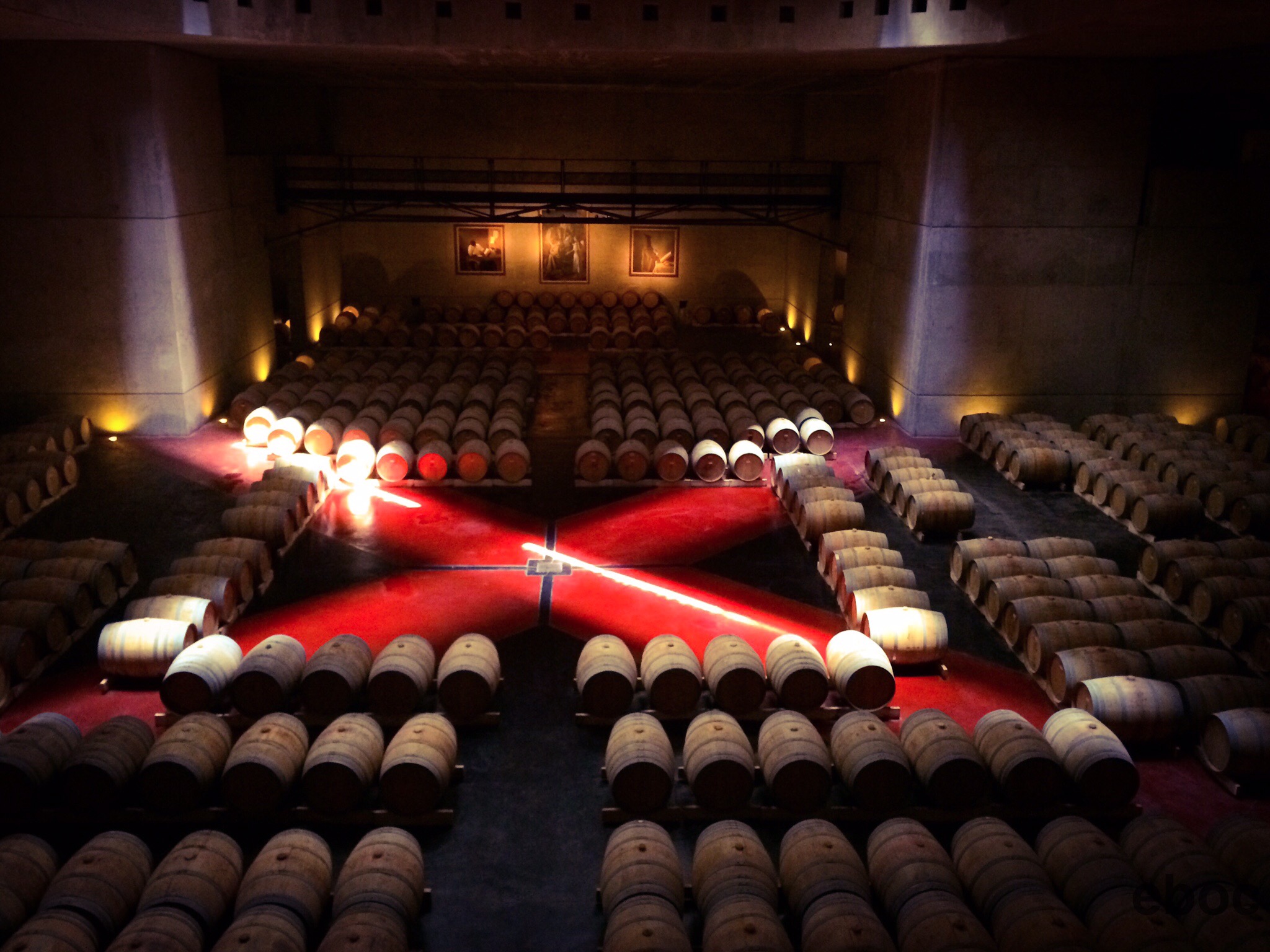
The last vineyard is operated by Spaniards in San Juan. It was built by the same architect who designed Salentien and had the same flash and style. My guide did admit that we were really visiting the vineyard because of the restaurant, which is operated by the owner’s wife. The food was incredible and really out shone the wine.
The restaurant is built overlooking an artificial lake that reflects the Andes. It looks like Umbria with mountains, and for the first time in my life I could imagine having a destination wedding. Just as long as I could bring in wine from Clos de Los Siete of course.
 elizabethboconnell