Buenos Aires, Argentina: I have never been comfortable breaking the law. At some point during my childhood that was thoroughly beaten out of me. Full confession: I’ve never even brought drugs. Okay sure, I’ve been known to drive faster than the posted speed limit (alright, a lot faster); but really I’m a pretty honest citizen.
When I first heard about the blue dollar before coming to Argentina I was pretty skeptical. The more I learned it seemed like an excellent way to get ripped off.
I was instructed by an American, who had spent a semester studying abroad in Buenos Aires, to hold the bills up to the light to make sure I wasn’t being given fake money in exchange for my dollars. I asked how I was supposed to be able to tell the difference but didn’t really get an answer.
Yesterday I went to Calle Florida, which is one of the main pedestrian-only shopping streets, and went searching for one of the hawkers screeching “Cambio? Cambio?” I liked the looks of.
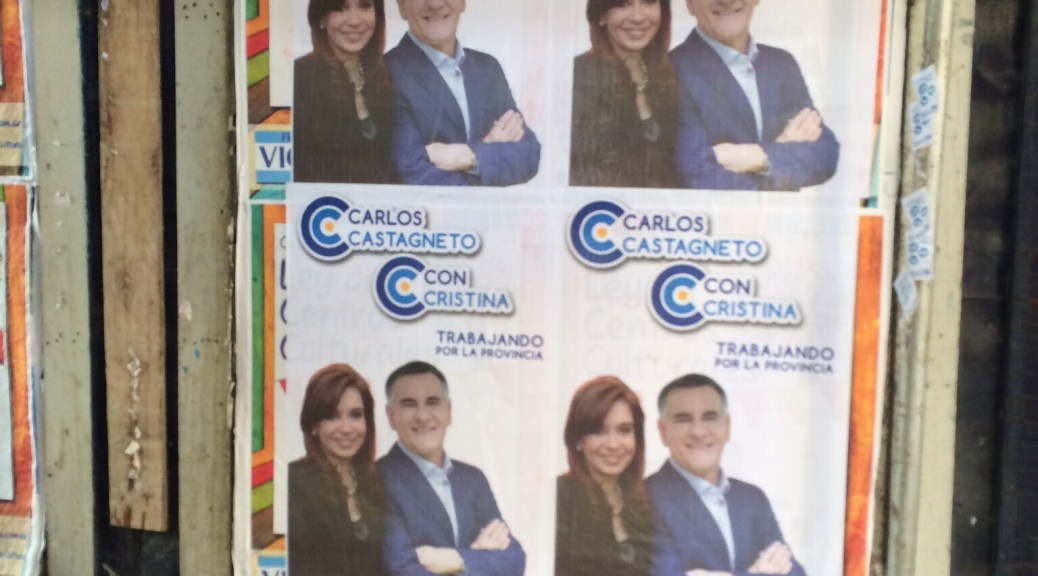
I found my guy standing near the corner of Av. Corrientes practically next to a government propaganda poster: “Carlos Castagneto con Cristina Trabjando por la Provincial.” He took me off the street and to an office in a nearby mall.
It seems to generally accepted that there are 12 Argentine pesos to the dollar, but if you bring higher denominations of bills typically you can get a higher rate. Based on what I had been told, I believe he gave me a good deal. At the very least I didn’t feel ripped off.
What I found so strange is that this underground market is quasi-sanctioned. Everyone from the immigration officer at the airport to a taxi driver asked me if I knew about the blue dollar. Ordinary Argentines keep their money in dollars, so they don’t lose their savings, and buy back pesos as needed.
Even in the darkest days of 2008 and 2009 it would have been hard to imagine Americans out selling euros and pounds for dollars on Canal Street.
 elizabethboconnell